VIDEO
HSK 5-21: 保持 bǎo chí
(v.) to keep, to maintain
胡小姐和前男友仍然保持联系。
胡小姐和前男友仍然保持聯繫。
hú xiǎo jiě hé qián nán yǒu réng rán bǎo
chí lián xì 。
Ms. Hu still keeps in touch with her
ex-boyfriend.
---
Keywords:
和 hé: and; with
前男友 qián nán yǒu: ex-boyfriend
仍然 réng rán: still
保持联系 bǎo chí lián xì: keep in touch
联系 lián xì: contact
----
More collocations about 保持 :
保持沉默 bǎo chí chén mò : keep silent
保持健康 bǎo chí jiàn kāng : keep healthy
保持干净 bǎo chí gān jìng : keep tidy
保持联系 bǎo chí lián xì : keep in touch
保持安静 bǎo chí ān jìng : keep quiet
保持清醒 bǎo chí qīng xǐng : keep awake
HSK 5-22: 保存 bǎo cún (v.)
[1] to conserve
他正在为稍后的比赛保存体力。
他正在為稍後的比賽保存體力。
tā zhèng zài wèi shāo hòu de bǐ sài bǎo cún
tǐ lì 。
He is conserving his energy for the later game.
[2] to keep (for oneself)
我可以保存这张照片吗?
我可以保存這張照片嗎?
wǒ kě yǐ bǎo cún zhè zhāng zhào piàn ma ?
Can I keep this photograph?
[3] to save a file in a computer/a
smartphone/ a laptop
何博士把重要的档案保存到电脑。
何博士把重要的檔案保存到電腦。
hé bó shì bǎ zhòng yào de dàng àn bǎo cún
dào diàn nǎo 。
Dr. Ho saved the important files in a
computer.
[In this usage, you can use “ 存 ” only.]
何博士把重要的档案保存到电脑。
= 何博士把重要的档案存到电脑。
---
HSK 5-23: 保留 bǎo liú (v.)
(1)
to
reserve
这个座位是保留给妇女与老人的。
這個座位是保留給婦女與老人的。
zhè ge zuò wèi shì
bǎo liú gěi fù nǚ yǔ lǎo rén de 。
This seat is
reserved for women and the elderly.
(2) to retain; to
keep
他把这段刻骨铭心的爱情保留在心中。
他把這段刻骨銘心的愛情保留在心中。
tā bǎ zhè duàn kè
gǔ míng xīn de ài qíng bǎo liú zài xīn zhōng 。
He retained this visceral love in his heart.
(3) to hold back ( to not speak or state an opinion)
有所保留 yǒu suǒ bǎo liú
莉莉在会议上有所保留,因为她知道她的意见太具争议性。
莉莉在會議上有所保留,因為她知道她的意見太具爭議性。
lì lì zài huì yì shàng yǒu suǒ bǎo liú ,
yīn wè i tā
zhī dào tā de yì jiàn tài jù zhēng yì xìng 。
Lily held back during the meeting because she
knew that her opinions were too controversial.
(4) without reservation; without
limitation
毫无 保留 háo
wú bǎo liú
这女孩毫无保留给了那渣男所有的爱。
這女孩毫無保留給了那渣男所有的愛。
zhè nǚ hái háo wú bǎo liú gěi le nà zhā nán
suǒ yǒu de ài 。
This girl gave all her love to the
womanizer without reservation.
--
HSK 5-24: 保险 / 保險 bǎo xiǎn
(n.) insurance
这位年轻人向李先生推销人寿保险。
這位年輕人向李先生推銷人壽保險。
zhè wèi nián qīng rén xiàng lǐ xiān shēng
tuī xiāo rén shòu bǎo xiǎn 。
This young man is selling life insurance to
Mr. Lee.
(v.) insure 保险 / 投保…险 (tóu bǎo …xiǎn ) take
out… insurance
旅行前先投保旅游险是很重要的。
旅行前先投保旅遊險是很重要的。
lǚ xíng qián xiān tóu bǎo lǚ yóu xiǎn shì
hěn zhòng yào de 。
It’s important to take out travel insurance
before you travel.
(Phr.) to play it safe 为了保险起见 wèi
le bǎo xiǎn qǐ jiàn
为了保险起见,带把伞在身上吧。
為了保險起見,帶把傘在身上吧。
wèi le bǎo xiǎn qǐ jiàn , dài bǎ sǎn zài shēn shàng ba 。
To play it safe, bring an umbrella with
you.
More information:
保险公司 bǎo
xiǎn gōng sī: insurance company
旅游险 lǚ
yóu xiǎn: travel insurance
推销保险 tuī
xiāo bǎo xiǎn: to sell insurance
车险 chē
xiǎn / 汽车保险 qì
chē bǎo xiǎn: car insurance
人寿保险 rén
shòu bǎo xiǎn: life insurance
提出 ( 保险 ) 理赔 tí chū (bǎo xiǎn )lǐ péi: to claim on the insurance
投保 tóu
bǎo / 办理保险 bàn
lǐ bǎo xiǎn: to insure; to take out an
insurance
---
HSK 5-25: 报到 / 報到 (v.) to register; to check in; to report for duty
外籍劳工入境后必须向当地警方报到。
外籍勞工入境後必須向當地警方報到。
wài jí láo gōng rù
jìng hòu bì xū xiàng dāng dì jǐng fāng bào dào 。
Foreign workers
have to register with the local police after immigration.
More example sentences:
请到接待处报到。
qǐng dào jiē dài chù bào dào 。
Please report to the reception desk.
那位新职员必须在两天内向经理报到。
nà wèi xīn zhí yuán bì xū zài liǎng tiān nèi xiàng
jīng lǐ bào dào 。
That new employee must report to the manager within
two days.
不好意思,请问报到处在哪里?
bù hǎo yì sī , qǐng wèn bào dào chù zài nǎ lǐ ?
Excuse me, where is the check-in counter?
---
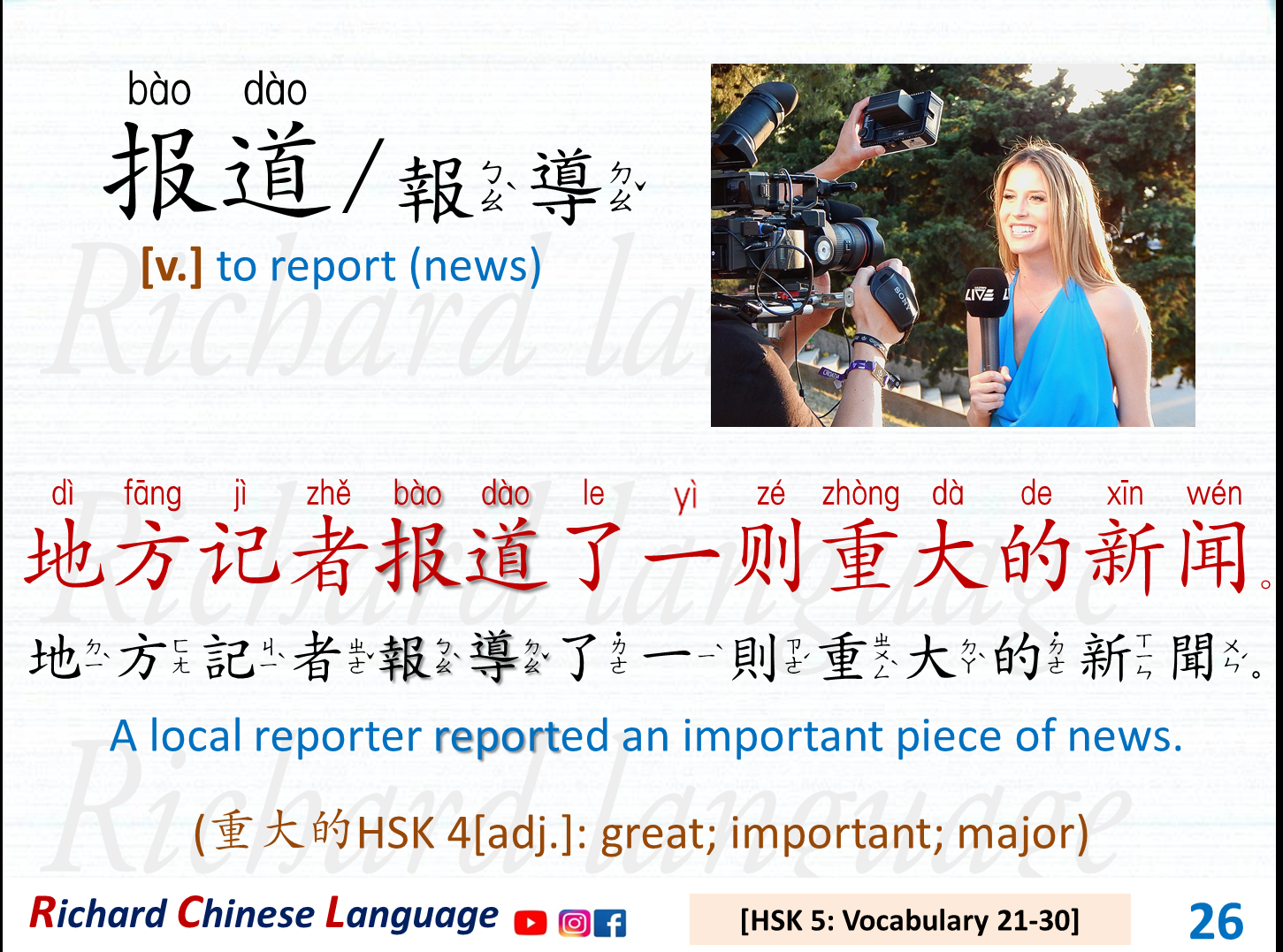
HSK 5-26: 报道 / 報導 bào dào (v.)
to report (news)
地方记者报道了一则重大 的 新闻。
地方記者報導了一則重大的新聞。
dì fāng jì zhě bào dào le yì zé zhòng dà de
xīn wén 。
A local reporter reported an important
piece of news.
---
HSK 5-27: 报告 / 報告 bào gào
(1)
[n.] a report
钱教授对我们的报告相当满意。
錢教授對我們的報告相當滿意。
qián jiào shòu duì wǒ men de bào gào xiāng
dāng mǎn yì 。
Prof. Qian is quite satisfied with our
report.
写 / 做报告 : to write/do a report;
交 ( jiāo ) 报告 : to hand in a report;
一份报告 - 份 (fèn)
is the measure word for a report
(2)
[v] to report; to make known
他向老板报告他的年度业绩。
他向老板報告他的年度業績。
tā xiàng lǎo bǎn bào gào tā de nián dù yè
jì 。
He reported to his boss on his annual
sales.
--
HSK 5-28: 报社 / 報社 bào shè ( n.)
newspaper office
包大 卫毕业后,在当地的报社工作 。
包大衛畢業後,在當地的報社工作。
bāo dà wèi bì yè hòu , zài dāng dì de bào shè gōng zuò 。
David Bao worked for a local newspaper
(office) after he graduated.
[ 当地的 dāng dì de / 地方的 dì fāng de: local]
-----
HSK 5-29: 抱怨 bào yuàn ( v.) to complain;
to grumble
1.
(v.) to complain
杨娜娜总是抱怨老板给她太多工作。
楊娜娜總是抱怨老板給她太多工作。
yáng nà nà zǒng shì bào yuàn lǎo bǎn gěi tā
tài duō gōng zuò 。
Nana Yang always complained that her boss
gave her too much work.
[ 抱怨 = 发牢骚 (informal) ]
2.
(v.) to grumble
她整天都在跟我抱怨她 的 老公。
她整天都在跟我抱怨她的老公。
tā zhěng tiān dōu zài gēn wǒ bào yuàn tā de
lǎo gōng 。
She spent the whole day grumbling to me
about her husband.
--
HSK 5-30: 背 bèi/ bēi (4 usages)
(1)
bèi
[v.] to memorize
老师要求我们每周背一首英文诗。
老師要求我們每週背一首英文詩。
lǎo shī yā o
qiú wǒ men měi zhōu bèi yì shǒu yīng wén shī 。
The teacher asked us to memorize an English
poem every week.
(2)
bèi
[n.] the back of the body
连续工作十小时让他的背很痛。
連續工作十小時讓他的背很痛。
lián xù gōng zuò
shí xiǎo shí ràng tā de bèi hěn tòng 。
Working nonstop for
ten hours gave him such backache.
(3)
bēi
[v.] to carry on the back
(Pay attention to
the pronunciation.)
他把宝宝背在背上。
他把寶寶背在背上。
tā bǎ bao bǎo bēi
zài bèi shàng 。
He carried the baby
on the back.
(4)
bèi
[adj.] unlucky; down on one’s luck; not one’s day
我昨天运气很背。
我昨天運氣很背。
wǒ zuó tiān yùn qì
hěn bèi 。
It was not my day
yesterday.